Best Interactive Cat Toys and Puzzle Feeders
Indoor cats still have a hunting instinct, and the right toy lets them use it. The decisions that matter are how the toy moves, whether your cat can catch it and what it is made of. This page is for owners of indoor cats who want to add play, slow down fast eaters or rotate toys that have gotten stale.
Jump to section
What we look for
Prey-like motion
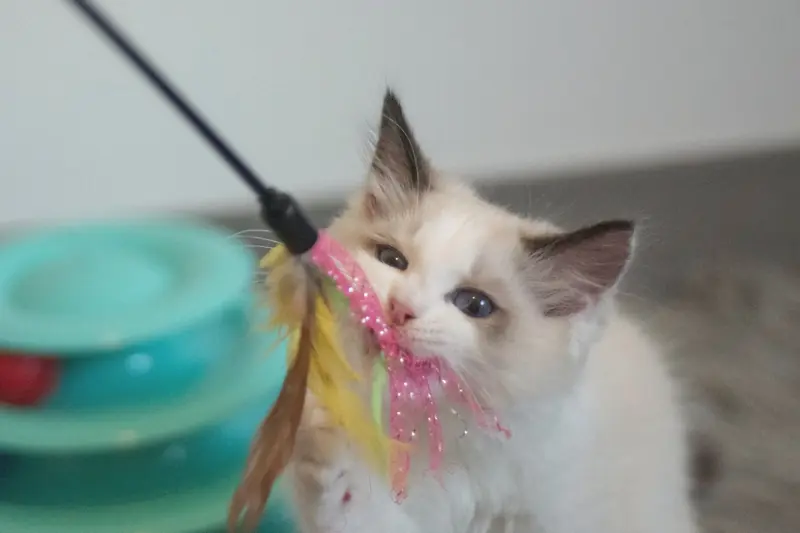
the AAFP/ISFM guidelines recommend prey-like toys such as feathers and fur.
Lets the cat catch it
a rod or wand lets the cat catch the toy, which completes the hunt.
Durability and safe parts
a toy that breaks into pieces can be swallowed, so check the parts.
Food-puzzle option
puzzle feeders turn mealtime into play and promote small, frequent meals.
Battery or automatic vs wand
electronic toys keep a cat busy alone, while a wand needs you.
Easy to rotate
rotating toys prevents the cat from getting used to them.
- Sources: manufacturer product pages and manuals, warranty terms, and the AAFP/ISFM environmental needs guidelines for what play and feeding enrichment should look like.
How to choose the right interactive cat toy
Good play follows how cats hunt. Our guide to indoor cat enrichment lays out the five pillars vets use, and the automatic feeder picks cover timed meals.
Choose toys that copy hunting. The AAFP/ISFM guidelines say to provide opportunity for play and predatory behavior, with prey-like toys such as feathers or fur and a rod or wand so the cat can catch the toy (AAFP/ISFM). That is why the Toy type column matters: a wand lets you control the motion, while an electronic toy moves on its own and a kicker gives a cat something to grab.
Rotate toys to prevent boredom, and keep your hands and feet out of play. The same guidelines recommend puzzle feeders to promote small, frequent meals, and suggest scattering or hiding food. Check the Small parts column on any toy and look at the materials for safe, durable construction. For puzzle feeders, the Dishwasher-safe and Difficulty levels columns tell you how much work they are to clean and to scale up.
Prey-like motion
The AAFP/ISFM guidelines recommend toys that act like prey, such as feathers or fur (AAFP/ISFM). Check the toy type and materials columns. A wand toy moves the way a bird or a mouse might, which suits that instinct. Our guide on indoor cat enrichment explains why play that copies hunting matters.
Lets the cat catch it
The AAFP/ISFM guidelines suggest a rod or wand so the cat can catch the toy (AAFP/ISFM). End each play session by letting your cat catch the toy.
Durability and safe parts
Check the small parts column and the materials. Replace any toy that frays, cracks or loses pieces, and put wand toys away after play so your cat cannot chew the string. Follow the maker's age and safety notes.
Food-puzzle option
The guidelines recommend puzzle feeders to promote small, frequent meals, and suggest scattering or hiding food (AAFP/ISFM). Check whether a puzzle has adjustable difficulty so you can start easy and make it harder. Pair puzzle use with the portions your vet recommends.
Battery or automatic vs wand
Electronic toys move on their own, which helps when you are away, but the AAFP/ISFM guidelines advise positive, consistent human-cat interaction (AAFP/ISFM). A wand puts you in the game. Check the power column for batteries or USB, and think about whether the noise or motion could startle your cat.
Easy to rotate
The guidelines say to rotate toys to prevent habituation (AAFP/ISFM). A set of small toys that you can swap in and out works better than one big toy that stays out. Check whether replacement attachments are sold for wands.
Tips for using your interactive cat toy
- Avoid using hands and feet in play, as the AAFP/ISFM guidelines advise (AAFP/ISFM).
- Rotate toys to prevent boredom (AAFP/ISFM).
- Scatter or hide food around the home to turn a meal into a hunt (AAFP/ISFM). See our automatic feeder guide.
- Put some toys away for a few days and bring them back later. Rotation keeps them interesting (AAFP/ISFM).
FAQ
What kind of toys do vets recommend?
The AAFP/ISFM guidelines recommend prey-like toys, such as feathers or fur, and a rod or wand so the cat can catch the toy (AAFP/ISFM).
Should I play with my hands?
No. The guidelines say to avoid using hands and feet in play (AAFP/ISFM).
How do I stop my cat getting bored?
Rotate toys to prevent habituation (AAFP/ISFM).
Are puzzle feeders worth it?
The guidelines recommend puzzle feeders to promote small, frequent meals, and suggest scattering or hiding food (AAFP/ISFM).
Related
-
-
-
Buying guide
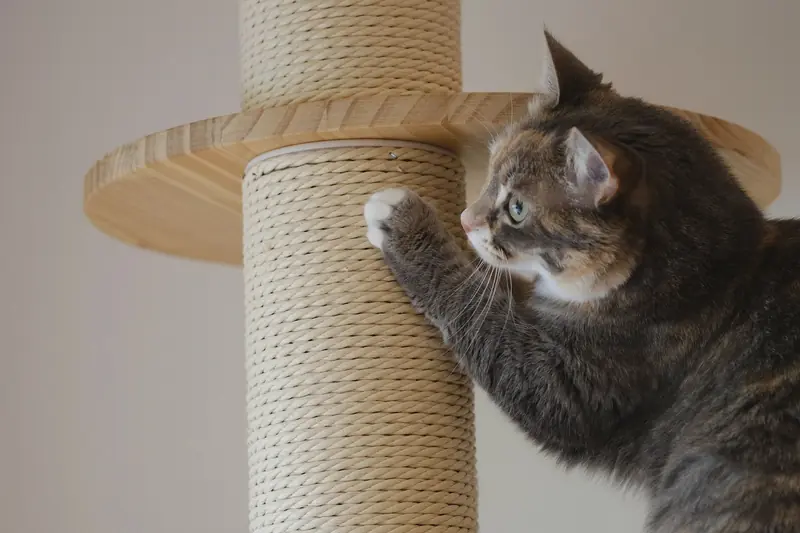
Best Cat Scratching Posts and Scratchers
Height, orientation, material and base weight, side by side.
-
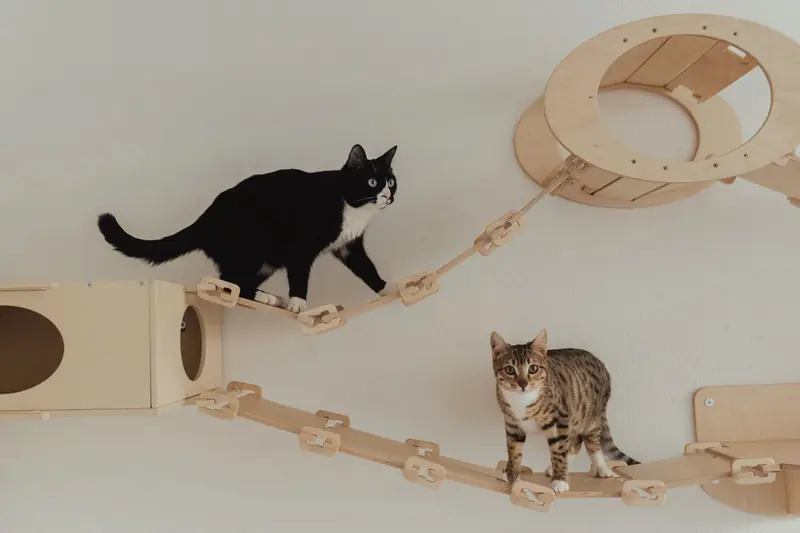
Guide
Indoor Cat Enrichment: The Five Pillars, Explained
The AAFP/ISFM five pillars turned into a home checklist.
-
Get the Cat-Ready Home Checklist
A printable checklist built on AAFP, ASPCA, Cornell and FDA guidance, from how many litter boxes you need to which flowers to keep out. Free, and sized for the fridge door.