
Clumping vs Non-Clumping Cat Litter
Clumping litter forms solid balls around waste so you can scoop them out. Non-clumping litter does not form solid clumps, so the way you clean the box differs. ASPCA says cats generally prefer unscented clumping litter with a medium-to-fine texture (ASPCA), which makes clumping a good starting point for most homes.
Clumping litter: the better choice if…
- You want to scoop daily and keep the rest of the litter in the box.
- You are starting with the type ASPCA says most cats prefer.
- You plan to use a self-cleaning box that calls for clumping litter.
Non-clumping litter: the better choice if…
- Your cat has shown that it prefers it, or your vet has suggested it.
- You have a box whose maker calls for non-clumping litter.
- You are happy to follow the maker's change schedule.
Jump to section
At a glance
| Point | Clumping litter | Non-clumping litter |
|---|---|---|
| Cat preference | ASPCA: generally preferred, if unscented | Not named as the general preference |
| Scooping and odor | Scoop clumps daily | Follow the maker's schedule |
| Change frequency | ASPCA: weekly full change | Check the label |
| Dust | Varies; maker claim | Varies; maker claim |
| Cost per month | Depends on price and use | Depends on price and use |
| Self-cleaning boxes | Depends on the box; check the manual | Check the manual |
Cat preference
ASPCA says cats generally prefer unscented, clumping litter with a medium-to-fine texture, and that scented cleaners can cause aversion (ASPCA). That does not mean your cat will agree. If your cat is happy with its litter, a change is a risk, so switch gradually and only for a reason.
Scooping and odor
Clumping litter lets you lift out waste in solid pieces, which is why daily scooping works well with it. ASPCA advises scooping at least once a day (ASPCA). Non-clumping litter is handled differently, so read the maker's directions on the bag.
Change frequency
ASPCA advises washing the box once a week with warm water and unscented soap, baking soda or no soap, then fully replacing the litter (ASPCA). Check the label of your litter for the maker's own schedule. Our setup guide puts the full routine on one page.
Dust
Dust levels vary by product, and a low-dust statement is a maker claim that we have not measured. Read the listing and watch how your cat and your home react. If you have a breathing concern for yourself or your cat, ask your doctor or vet.
Cost per month
Monthly cost depends on how many cats you have, how much litter you use and the current price of the product on Amazon. Use the bag weight in the spec table on our cat litter picks and that price to work out a cost per pound, then multiply by how much you use.
Compatibility with self-cleaning boxes
Self-cleaning boxes differ. Some work with ordinary clumping litter, some need crystals and some need the maker's own product. Check the manual and the listing before you buy litter for a self-cleaning box.
Which should you buy?
Start with unscented clumping litter in a medium-to-fine texture, which ASPCA says cats generally prefer, and see our cat litter picks, which list both litter types. Switch only if your cat, your box or your vet gives you a reason.
Alternatives
Choosing a box too? See self-cleaning vs regular litter box or our litter box picks.
FAQ
What litter do most cats prefer?
ASPCA says cats generally prefer unscented clumping litter with a medium-to-fine texture (ASPCA).
How often should I change the litter?
Scoop at least daily, and wash the box and fully replace the litter weekly (ASPCA).
Will a new litter stop my cat peeing outside the box?
Maybe not. Rule out medical issues first, such as a urinary tract infection, interstitial cystitis or stones (ASPCA). Call your vet.
Sources
Related
-
-
Buying guide
Best Litter Boxes (Large, Low-Entry and High-Sided)
Size, side height, entry height and material for every cat.
-
Buying guide
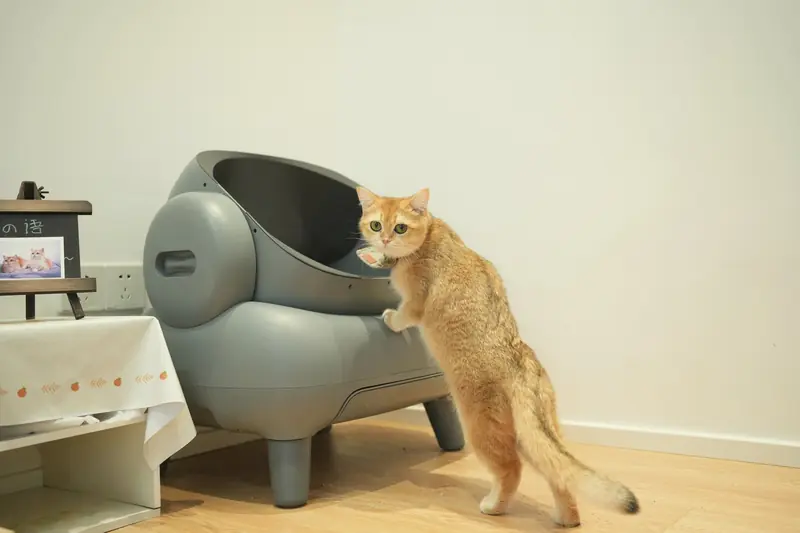
Best Self-Cleaning Litter Boxes
Minimum cat weight, entry height, drawer size and upkeep, side by side.
-
Comparison
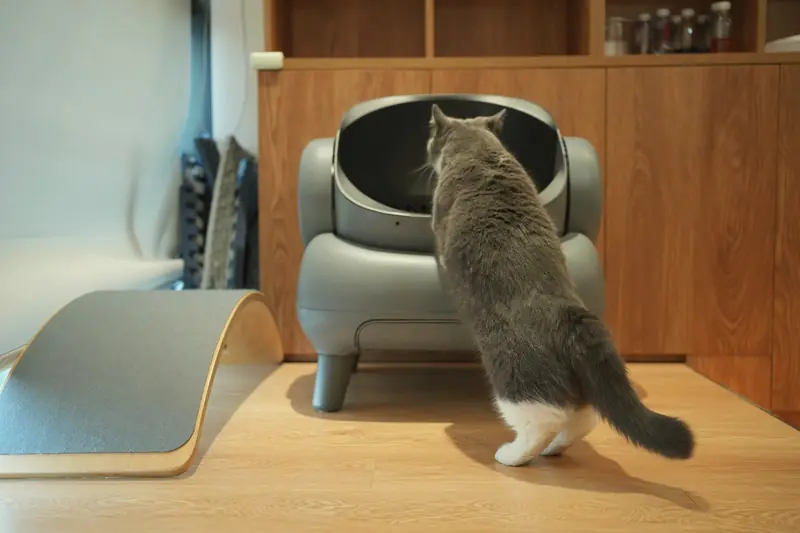
Self-Cleaning vs Regular Litter Box: Worth the Money?
Less scooping and more parts, or a simple pan you control.
-
Guide
Litter Box Setup: How Many, Where, and How Often to Clean
Box count, placement, litter depth and cleaning schedule from ASPCA and Cornell.
Get the Cat-Ready Home Checklist
A printable checklist built on AAFP, ASPCA, Cornell and FDA guidance, from how many litter boxes you need to which flowers to keep out. Free, and sized for the fridge door.